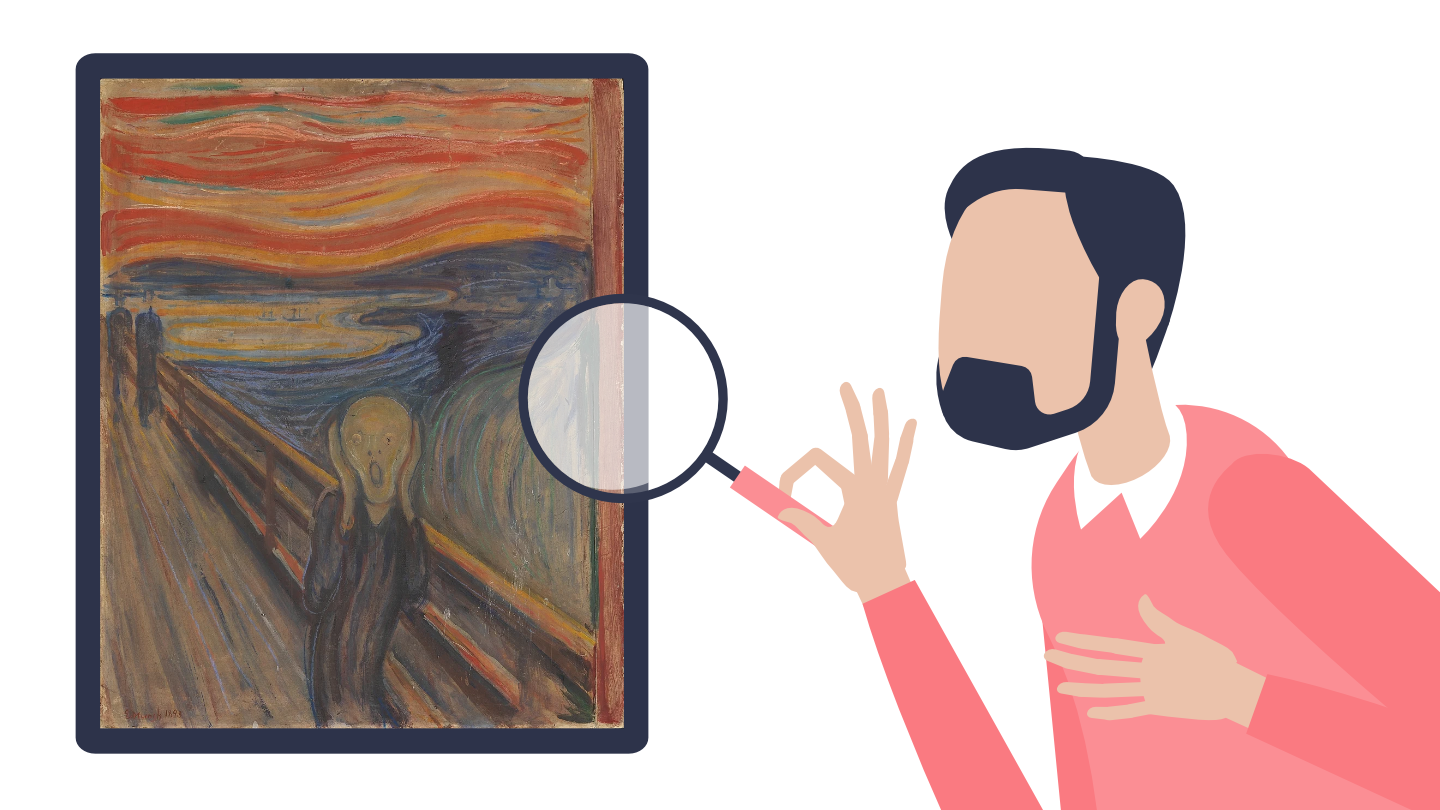
Most of us lock the doors and set the alarm before bed. But very few of us have ever tried to break into our own house, to see whether any of it actually works.
A pen test is a planned, permitted attempt to find the gaps in your systems and use them, the way an attacker would.
It's important because security you haven't tested is security you're assuming. A pen test shows you what someone could actually do, so you can fix it before anyone else finds it.
On 12 February 1994, the morning the Winter Olympics opened in Norway, two men leaned a ladder against the National Gallery in Oslo, climbed through a window and took Edvard Munch's The Scream off the wall. It took less than a minute.
The gallery had security. What it didn't have was anyone who had tried to get past it the way a thief would. The thieves left a note behind: "Thanks for the poor security."
The painting was recovered, undamaged, a few months later. But the lesson holds for any business: the only way to know how good your security is, is to have someone try it.
Every system has gaps: a setting left on, an update that didn't happen, a password used in more than one place. Most aren't a problem until someone finds them. A pen test means the first person to find them is working for you.
A vulnerability scan can list hundreds of possible weaknesses. A pen test shows which ones are real, and where they lead. A gap that looks harmless on its own can be the first step to something much bigger, and that's something a list can't show you.
Some clients ask for a recent pen test before they'll work with you, some insurers ask about testing, and some certifications expect it. A pen test won't make you compliant on its own, but it gives you real evidence of where you stand.
A pen test shows where you stand on the day it's done. Systems change, with new software, new people and new suppliers, so it's a snapshot rather than a guarantee. The value comes from fixing what it finds, and testing again when things change.
Writing for the people who don't speak cyber.
Got a question we didn't answer?
That's our favourite kind.